




Introduction
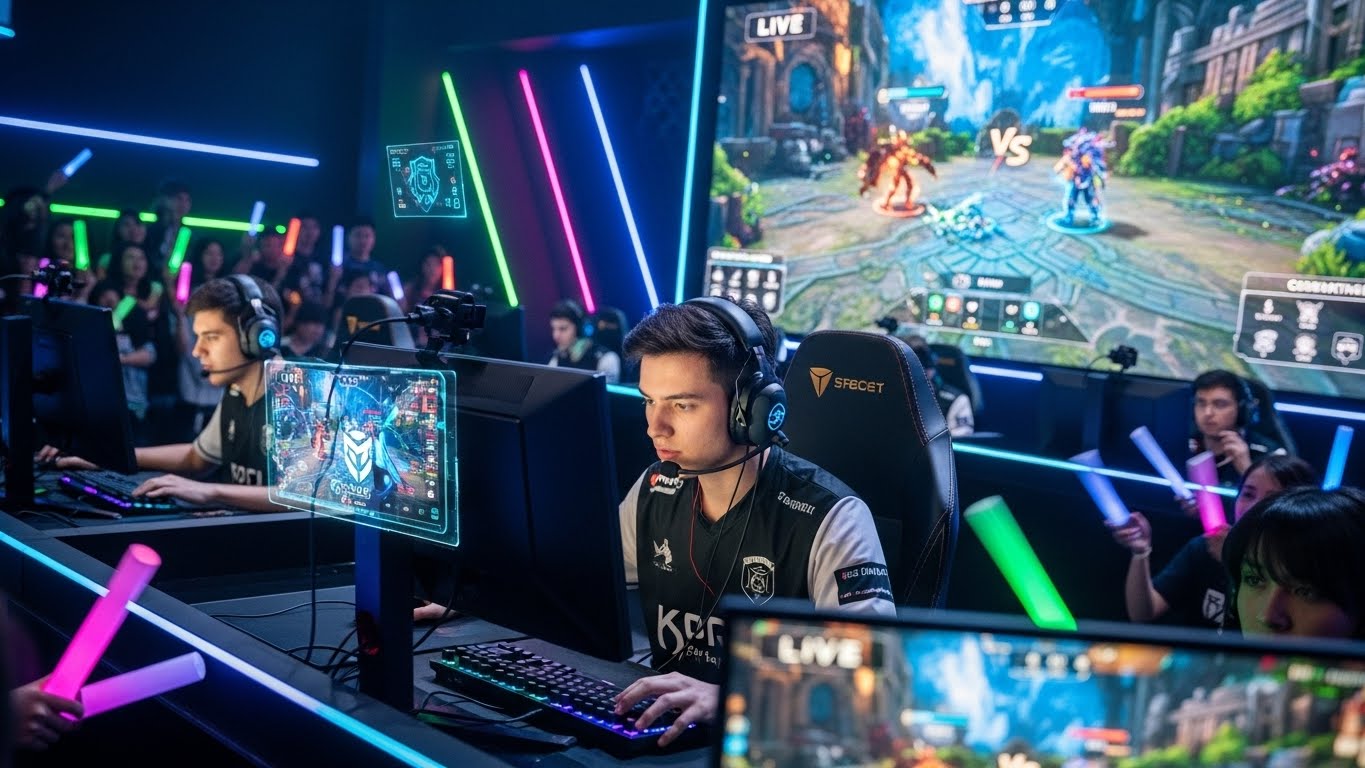
Once upon a time, sports meant running on grass, sweating under the sun, and scoring goals with a crowd roaring in the stands. Today, the definition of sports has expanded beyond physical fields and stadiums. The modern battlefield is digital, the arena is virtual, and the athletes wield keyboards and controllers instead of bats and balls. This is the age of esports — a phenomenon that has transformed from a niche hobby into a billion-dollar global industry.
In just two decades, esports has grown faster than most traditional sports did in a century. From small LAN parties to grand international championships watched by millions, the rise of competitive gaming marks one of the most remarkable cultural shifts of the 21st century. This blog dives deep into how esports evolved, what drives its success, and why it has become a defining part of modern entertainment.
The Origins of Competitive Gaming
To understand esports, one must look back to where it all began. The earliest recorded video game competition dates to 1972 at Stanford University, where students battled in a game called Spacewar. The prize was modest — a year’s subscription to Rolling Stone magazine — but it marked the birth of competitive gaming.
Through the 1980s, the arcade era brought a new form of rivalry. Players competed to achieve the highest scores on games like Pac-Man and Donkey Kong. Names like Billy Mitchell became legends, their records immortalized in early gaming magazines. These contests were simple but laid the foundation for what would become professional gaming.
Then came the internet. The 1990s connected players across the globe and birthed games like Quake, StarCraft, and Counter-Strike. For the first time, competition was not limited by geography. LAN parties evolved into international tournaments, and by the early 2000s, organized leagues began forming.
The Explosion of Esports in the 21st Century
The early 2000s were pivotal for esports. The rise of broadband internet and online multiplayer games turned casual gaming into a social experience. Titles like Warcraft III, Dota, and Halo established the foundations of team-based competitive play. South Korea, in particular, became the global hub for professional gaming. With dedicated television channels broadcasting matches and players achieving celebrity status, Korea’s influence set the blueprint for modern esports culture.
The real explosion, however, came with streaming platforms. Services like Twitch and YouTube Gaming allowed millions to watch live matches from anywhere. Suddenly, esports was not just a competition; it was a spectacle. The viewership numbers rivaled those of traditional sports. Games like League of Legends, Dota 2, Overwatch, and Fortnite started filling massive arenas like Madison Square Garden and the Staples Center.
By the mid-2010s, esports had officially gone mainstream. Sponsorships poured in from global brands, prize pools exceeded tens of millions, and professional teams began operating like traditional sports franchises, complete with coaches, analysts, nutritionists, and media managers.
The Professional Esports Ecosystem
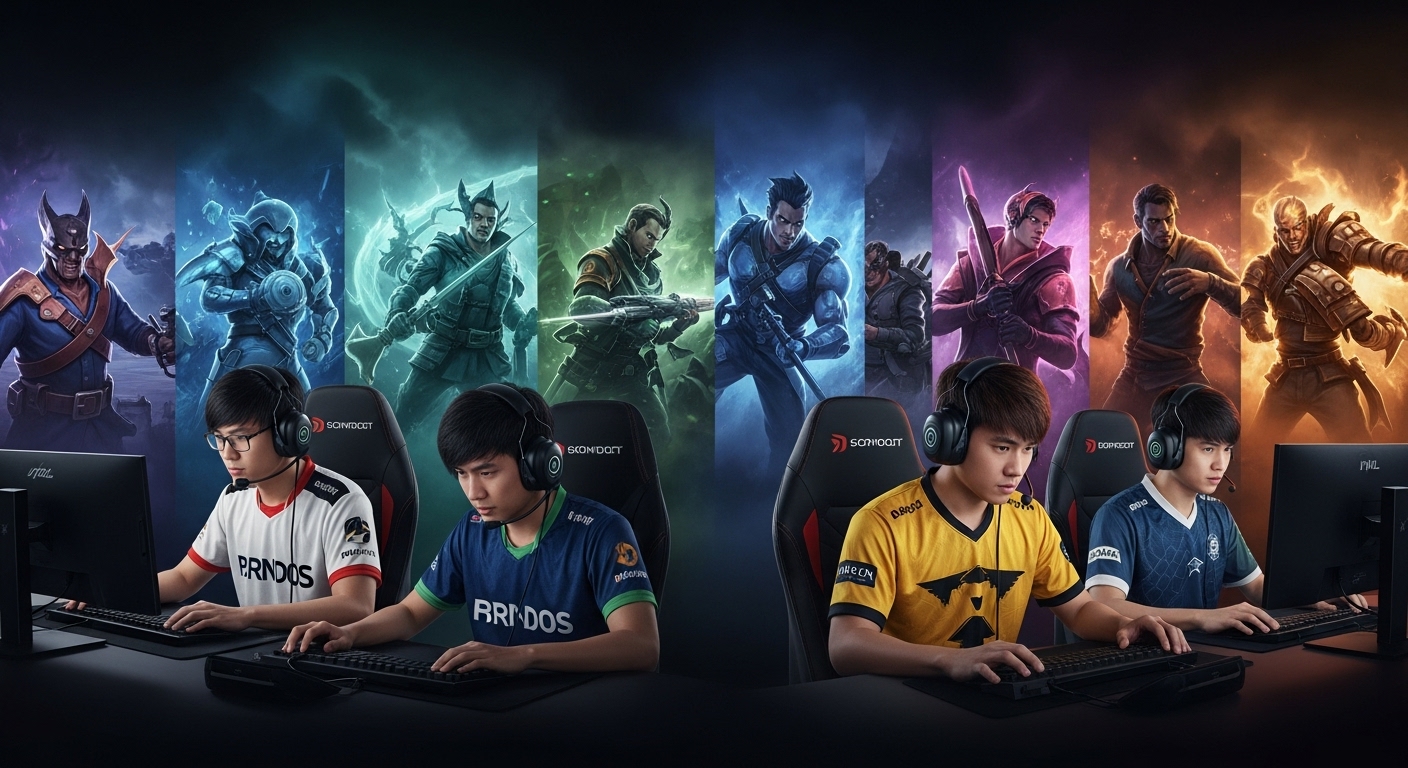
At the heart of esports lies a complex ecosystem involving players, teams, leagues, organizers, sponsors, and fans. Professional gamers train rigorously, often practicing for eight to twelve hours a day. Their schedules are filled with scrimmages, strategy sessions, and mechanical drills. What may appear as simple gaming is, in reality, an exercise in precision, teamwork, and mental endurance.
Esports organizations such as Team Liquid, Cloud9, Fnatic, and T1 have become global brands. They manage players across multiple games, host content creation teams, and partner with apparel and technology companies. The infrastructure surrounding these teams mirrors that of traditional sports clubs, complete with branding, merchandising, and talent management.
Leagues like the League of Legends Championship Series (LCS) and Overwatch League have introduced franchise systems, ensuring stability for teams and fostering city-based rivalries. This professionalization has attracted investors from the worlds of traditional sports, entertainment, and venture capital. Even owners of basketball and football teams have invested in esports, recognizing its potential as the next frontier of global entertainment.
The Global Reach and Cultural Influence
Esports is not bound by borders. Unlike physical sports that may rely on regional presence, esports thrives in the digital space where anyone with an internet connection can participate or spectate. Countries like South Korea, China, the United States, and Sweden have long been powerhouses, but new regions such as Southeast Asia, Latin America, and the Middle East are rapidly catching up.
Esports has also become a unifying force among youth cultures worldwide. It brings together people from diverse backgrounds under one digital banner. In classrooms, universities, and even workplaces, conversations about favorite teams, highlight plays, and upcoming tournaments have become as common as those about traditional sports events.
Moreover, esports has influenced fashion, music, and technology. Artists perform at esports finals, luxury brands design gaming apparel, and tech companies develop hardware optimized for esports performance. The blending of culture and technology within esports is reshaping how we view modern entertainment.
The Economics of Esports
The financial side of esports is as fascinating as its gameplay. According to various industry reports, the esports market has surpassed the billion-dollar mark, driven by sponsorships, advertising, media rights, merchandise, and ticket sales.
Prize pools for top tournaments are staggering. The Dota 2 International holds the record for one of the largest prize funds in competitive history, with over 40 million dollars distributed in a single year. These rewards attract players worldwide, motivating them to turn their passion into a profession.
Streaming platforms and content creation also contribute significantly to the industry’s revenue. Popular streamers can earn millions through sponsorships, subscriptions, and donations. Esports has blurred the line between athlete and entertainer, giving rise to hybrid figures who both compete professionally and build massive online followings.
Esports and Education
One of the most exciting developments in recent years is the integration of esports into education. Universities and colleges now offer scholarships to talented players, recognizing esports as a legitimate field of study and competition. Academic programs have emerged focusing on game design, event management, and digital marketing related to esports.
High schools are introducing esports clubs, teaching students teamwork, communication, and problem-solving skills. These programs help young gamers channel their passion into productive, disciplined pathways. Esports education not only nurtures future players but also prepares a new generation of analysts, coaches, developers, and marketers who will sustain the industry’s growth.
The Psychology of Competitive Gaming
Esports may appear to be all about reaction time and strategy, but its psychological dimension is profound. Professional players must maintain immense mental focus under pressure, adapt to constantly changing situations, and perform flawlessly on the global stage. The stress of high-stakes competition, combined with long training hours, demands resilience and mental toughness.
Teams now employ sports psychologists to help players manage anxiety, burnout, and performance consistency. Maintaining a healthy balance between gaming and personal life is crucial. The recognition of mental health in esports reflects a broader cultural shift toward understanding the psychological challenges faced by all high-performance professionals.
Technology Driving Esports Forward
Esports would not exist without technology, and technological innovation continues to push it forward. High-refresh-rate monitors, ergonomic peripherals, low-latency connections, and powerful gaming PCs all enhance performance and viewing quality.
Streaming technology has been revolutionary, allowing real-time interaction between players and fans. The development of virtual reality (VR) and augmented reality (AR) is opening new possibilities for immersive esports experiences. Soon, fans might be able to “step into” the arena virtually, watching matches from the perspective of their favorite players.
Artificial intelligence is also making waves. AI is used to analyze gameplay data, detect cheating, and even coach players through pattern recognition and performance metrics. This fusion of human skill and technological advancement defines the futuristic essence of esports.
The Role of Women in Esports
For many years, esports was perceived as a male-dominated domain. However, that narrative is changing rapidly. Women are rising as professional players, casters, and industry leaders. Organizations are creating inclusive tournaments and promoting gender diversity within gaming communities.
Figures such as Sasha “Scarlett” Hostyn, Geguri, and Pokimane have shattered stereotypes, inspiring millions of female gamers worldwide. The increasing representation of women in esports is vital, not just for equality but for expanding the creativity and talent pool of the entire industry.
Challenges Facing the Esports Industry
Despite its immense growth, esports faces several challenges. Player burnout is a serious issue, as the constant pressure and grueling schedules can lead to physical and mental fatigue. The lack of standardized regulations across different games and regions also creates inconsistencies in player rights and contracts.
Another concern is sustainability. While viewership and sponsorships are booming, profitability remains a challenge for many teams and tournament organizers. Balancing commercial interests with community values will be crucial for the industry’s long-term stability.
Toxic behavior and online harassment are additional problems. Competitive gaming environments can sometimes foster negativity, but organizations and platforms are increasingly implementing stricter codes of conduct and moderation tools to build healthier communities.
Esports and Traditional Sports: Rivals or Partners?
The relationship between esports and traditional sports is fascinating. At first, many dismissed esports as a passing fad or something less legitimate than physical sports. But as viewership numbers and sponsorship deals grew, attitudes began to change.
Today, traditional sports leagues are embracing esports. The NBA runs the NBA 2K League, Formula 1 has virtual racing competitions, and football clubs like Paris Saint-Germain and Manchester City own esports divisions. The synergy between both worlds is undeniable.
In essence, esports is not replacing traditional sports; it is expanding the definition of what sports can be. Both fields share the same core values — competition, strategy, teamwork, and passion. The difference lies in the medium of play.
The Future of Esports
The future of esports is boundless. With technology evolving at breakneck speed, new gaming genres, virtual platforms, and interactive experiences will continue to emerge. The metaverse concept, blending social interaction and digital spaces, could revolutionize how esports events are hosted and consumed.
We may soon see fully immersive tournaments where fans can participate virtually alongside their favorite teams. AI-driven analytics might predict game outcomes in real time, while blockchain technology could secure player contracts and digital assets.
Moreover, esports will continue to play a significant role in shaping youth culture. As digital natives grow up, esports will remain central to how they socialize, compete, and express themselves. Schools, brands, and governments will increasingly recognize its power to educate, unite, and inspire.
Conclusion: The Dawn of a New Sporting Era
Esports is more than a trend — it is a cultural revolution. What began as friendly matches in college dorms has evolved into a sophisticated, global ecosystem that rivals traditional sports in scale and influence. It combines the best of technology, entertainment, and human creativity.
The digital arena has proven that skill, passion, and community can transcend physical boundaries. Whether one is a professional player, a dedicated fan, or a casual gamer, esports offers a place where everyone can belong.
As the virtual and physical worlds continue to merge, one thing is certain — the rise of esports marks the dawn of a new sporting era, one where the only limits are those of imagination and innovation.
Word Count: ~2,210 words