






Introduction
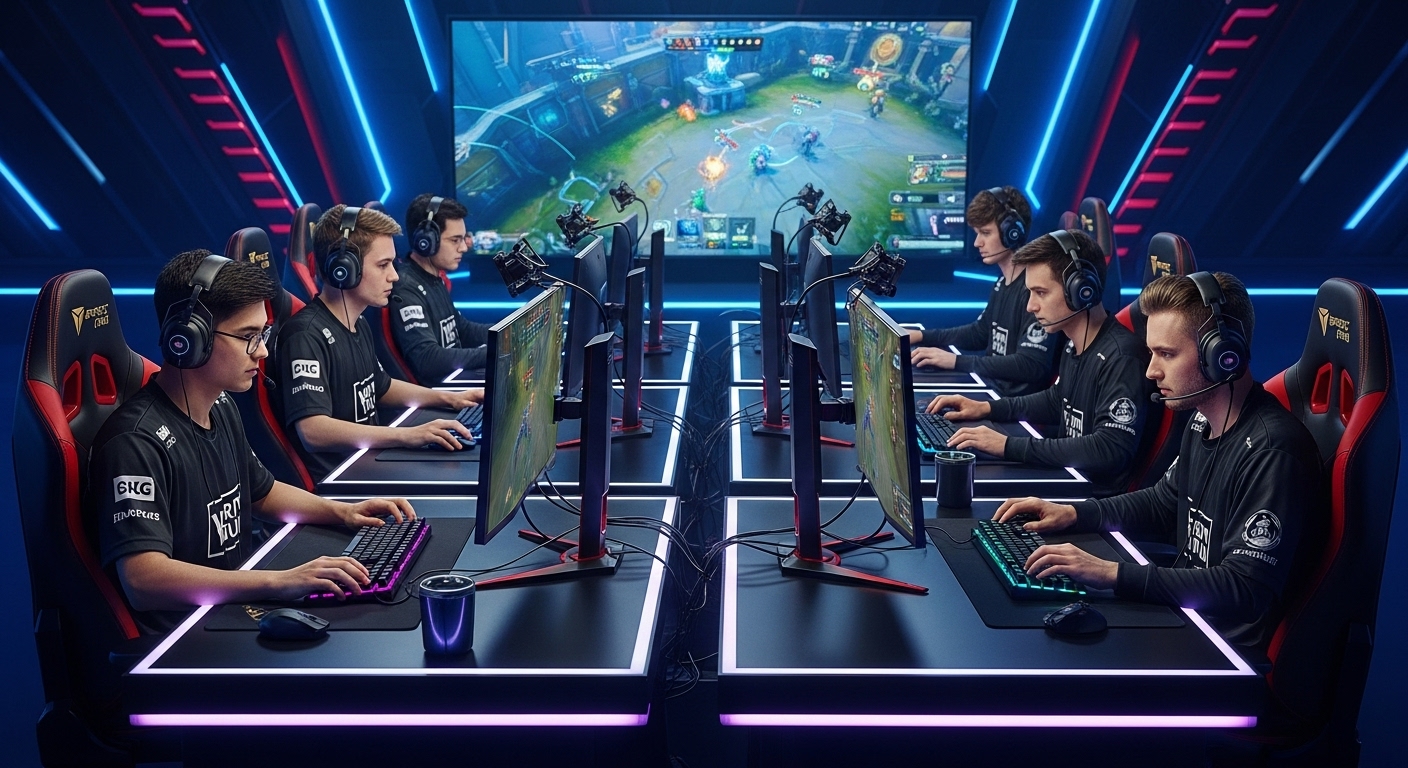
A few decades ago, video games were often dismissed as a simple pastime, a form of recreation enjoyed mostly by children and teenagers. Fast forward to the present, and gaming has transformed into a billion-dollar industry — with esports standing at its forefront. The competitive gaming scene has evolved from small local gatherings into massive international tournaments, watched by millions and celebrated as a legitimate sporting discipline. Esports has not only reshaped entertainment but also created entirely new careers, cultures, and communities.
In this article, we will explore the rise of esports, its social and economic impact, its influence on global culture, and the challenges and opportunities that lie ahead for this dynamic industry.
The Origins of Esports
Esports, short for electronic sports, refers to organized competitive gaming where individuals or teams face off in video games for prizes, prestige, and recognition. The earliest roots of esports can be traced back to the 1970s. In 1972, Stanford University hosted one of the first known gaming competitions, centered around the space combat game Spacewar! The grand prize was a year’s subscription to Rolling Stone magazine — a far cry from the multimillion-dollar rewards offered today.
The 1980s witnessed a gradual growth of gaming culture. Arcade games like Pac-Man, Donkey Kong, and Space Invaders drew massive crowds to local arcades. The Space Invaders Championship organized by Atari in 1980 attracted over 10,000 participants across the United States, marking the first large-scale gaming competition. Although the term “esports” had not yet been coined, the seeds of competitive gaming were already being sown.
With the introduction of personal computers and home consoles in the late 1980s and early 1990s, gaming became more accessible. Titles like Street Fighter II and Mortal Kombat popularized one-on-one competition, while early PC games like Doom and Quake introduced multiplayer experiences over local area networks (LAN).
The Birth of Professional Gaming
The true professionalization of esports began in the late 1990s and early 2000s. This era was characterized by the formation of organized tournaments, dedicated teams, and gaming leagues. The Cyberathlete Professional League (CPL), established in 1997, was among the first organizations to treat gaming as a professional sport. Players began earning real salaries, sponsorships, and global recognition.
One of the most influential early games in esports was StarCraft, a real-time strategy game from South Korea. The competitive StarCraft: Brood War scene became a cultural phenomenon in South Korea, giving birth to dedicated esports TV channels and professional teams sponsored by major corporations. Players like Lim “BoxeR” Yo-hwan became national icons, revered in the same way traditional athletes were.
At the same time, first-person shooters like Counter-Strike and Quake III Arena built strong communities in North America and Europe. These games demanded not only reflexes but also tactical coordination, paving the way for the team-based competitive structures that dominate esports today.
The Internet Revolution and Online Competition
The 2000s saw a major turning point — the rise of broadband internet. High-speed connections made it possible for players to compete against others across the world without needing to be in the same physical space. Online platforms like Battle.net and Xbox Live connected millions of gamers, allowing competitive scenes to flourish globally.
Games like Counter-Strike 1.6, Warcraft III, Halo 2, and Call of Duty became staples of early online tournaments. LAN parties evolved into global competitions, with players and teams representing countries, regions, or professional organizations.
Streaming technology also began to change the way people consumed gaming content. Players could now broadcast their matches to audiences worldwide, and fans could follow their favorite players’ journeys from anywhere. The seeds of today’s streaming giants were planted during this period, although it would take a few more years before esports truly exploded into mainstream consciousness.
The Rise of Streaming and Global Audiences
The 2010s marked the golden age of esports. With platforms like Twitch and YouTube Gaming offering easy-to-access live broadcasts, competitive gaming became a spectator sport. Millions of fans tuned in to watch tournaments, just as they would for football or basketball games.
League of Legends, released by Riot Games in 2009, revolutionized esports viewership. Its annual World Championship quickly grew into one of the largest esports events in history, drawing millions of concurrent viewers and filling entire stadiums. Other major titles followed suit: Dota 2, Overwatch, Fortnite, and PUBG each built vast competitive ecosystems with professional leagues, international tournaments, and massive prize pools.
One of the defining moments in esports history was The International 2019 for Dota 2, which boasted a record-breaking prize pool of over $34 million. This staggering sum, largely crowdfunded by the community, demonstrated the power of fan engagement and the financial potential of esports.
Streaming also allowed players to build personal brands. Professional gamers like Faker, s1mple, Ninja, and Shroud became household names, commanding enormous fan followings. Their success helped redefine what it meant to be an athlete in the digital age.
The Economic Ecosystem of Esports
Esports is no longer just about playing games; it is a massive industry encompassing multiple revenue streams. Major tournaments attract sponsorships from global brands, ranging from tech giants to beverage companies. Advertising, broadcasting rights, merchandise, and ticket sales contribute significantly to the overall revenue.
Organizations such as Team Liquid, Fnatic, and Cloud9 operate much like traditional sports franchises. They manage teams across multiple games, maintain training facilities, hire coaches, analysts, and medical staff, and build strong fan engagement strategies.
The esports market has continued to grow year over year, with revenue projections in the billions. Major investments have flowed from venture capitalists, entertainment companies, and even traditional sports franchises. Cities across the globe are constructing esports arenas, and universities now offer scholarships for esports athletes, signaling a future where competitive gaming is fully integrated into mainstream sports culture.
The Cultural Impact of Esports
Beyond economics, esports has had a profound cultural impact. It has redefined the concept of sportsmanship, competition, and community in the digital age. The diversity of the player base means esports transcends geographical, linguistic, and cultural barriers. Players from any part of the world can compete on equal footing, fostering global connectivity and mutual respect.
Esports has also given rise to new forms of storytelling and identity. The rivalries between teams, the underdog stories, and the emotional triumphs of players resonate deeply with audiences. For many fans, esports is not just entertainment; it is a shared experience, a collective passion that unites people across continents.
Streaming culture has also changed how people relate to games and personalities. The line between player and fan has blurred. Viewers can interact directly with their favorite players, influencing strategies, cheering them on, and even supporting them financially through donations or memberships. This level of interactivity is something traditional sports can rarely offer.
The Psychology of Competitive Gaming
At the core of esports lies the psychology of competition. Professional players undergo rigorous training, sometimes practicing for 8 to 12 hours a day. Success demands mental resilience, quick decision-making, teamwork, and adaptability. The stress of performing under pressure in front of millions of viewers can be immense, rivaling that of traditional sports athletes.
Esports has also prompted discussions about mental health, burnout, and balance. With long practice hours and high expectations, players face intense scrutiny. Organizations are increasingly aware of the need for psychological support and structured training programs to ensure their players maintain peak performance both mentally and physically.
The cognitive demands of esports are profound. Studies have shown that top-tier players possess exceptional hand-eye coordination, reaction times, and multitasking abilities. The strategic complexity of games like League of Legends or StarCraft II requires analytical thinking comparable to chess or other intellectual pursuits.
The Role of Technology in Esports Growth
Technology has always been at the heart of esports, driving its evolution and accessibility. High-performance hardware, low-latency internet connections, and powerful gaming platforms have made it possible for players to compete globally in real time.
Streaming platforms have turned every gamer into a potential entertainer. Broadcasting software, overlays, and live chat features create immersive viewing experiences. Virtual reality (VR) and augmented reality (AR) are beginning to find their way into competitive gaming, offering new possibilities for both gameplay and spectating.
Data analytics also plays a crucial role. Teams now rely on performance data to optimize strategies, study opponents, and enhance player development. Artificial intelligence is being integrated into coaching tools to analyze in-game behavior and suggest tactical improvements.
Esports and Education
One of the most surprising developments in recent years has been the integration of esports into education. Schools and universities across the world have recognized the potential of esports to teach valuable skills such as teamwork, communication, leadership, and strategic thinking.
Colleges in North America, Europe, and Asia now offer esports programs, complete with scholarships and dedicated arenas. Students can major in game design, esports management, or broadcasting, preparing them for careers in this expanding industry.
Educational institutions have found that esports can engage students who might not otherwise participate in traditional extracurricular activities. It promotes inclusivity and collaboration, offering a sense of belonging to diverse student groups.
Challenges Facing the Esports Industry
Despite its explosive growth, esports faces several challenges. One major issue is sustainability. While prize pools and viewership numbers are impressive, profitability remains elusive for many organizations. Maintaining stable revenue streams in a volatile market requires innovation and diversification.
Another concern is player welfare. The young age of many professional players means they often face fame, pressure, and burnout early in their careers. Establishing clear regulations, fair contracts, and long-term career pathways is crucial to ensure the industry’s health.
Cheating and match-fixing also pose threats. As esports becomes more lucrative, the temptation to manipulate results increases. Developers and tournament organizers are investing heavily in anti-cheat systems, but maintaining integrity remains an ongoing battle.
Finally, the question of recognition persists. While esports has gained legitimacy in many parts of the world, it still struggles to be accepted universally as a “real sport.” Critics often cite the lack of physical exertion compared to traditional sports, though proponents argue that mental skill, strategy, and teamwork are equally valid forms of athleticism.
Esports and Mainstream Sports
Interestingly, traditional sports organizations are increasingly embracing esports rather than competing against it. Many major sports franchises have launched their own esports teams or leagues. For example, football clubs, basketball organizations, and racing associations have created virtual counterparts of their real-world competitions.
This synergy has blurred the boundaries between physical and digital sports. Esports tournaments are now broadcast on mainstream television channels, and major athletic brands sponsor players just like they do traditional athletes. The crossover appeal has expanded esports’ audience beyond the gaming community, reaching families, casual viewers, and even senior fans.
The pandemic years accelerated this convergence. With physical sports halted or limited, esports provided a valuable alternative, keeping competitive entertainment alive. Virtual competitions like Formula 1’s esports series attracted professional drivers and fans alike, reinforcing esports’ relevance in modern sports culture.
The Global Reach of Esports
Esports is truly global. From the arenas of Seoul and Shanghai to the stages of Los Angeles and Berlin, tournaments draw fans from every continent. Asia remains the powerhouse of competitive gaming, particularly South Korea and China, but Western nations have caught up rapidly.
Emerging regions such as Southeast Asia, the Middle East, and Latin America are developing thriving esports ecosystems. Governments are recognizing esports as a driver of innovation, tourism, and youth engagement. Major cities are investing in gaming infrastructure, including dedicated stadiums and training centers.
This worldwide expansion highlights esports’ universality. It is one of the few cultural phenomena that transcends borders effortlessly, uniting people through shared passion and competition.
The Future of Esports
Looking ahead, esports shows no sign of slowing down. The next decade promises continued growth, driven by technological advances, expanding audiences, and mainstream acceptance. Cloud gaming will make competitive play more accessible, removing hardware barriers. Virtual and augmented reality could revolutionize how games are played and watched, blending physical and digital experiences.
As the industry matures, regulation and governance will become more structured. International federations and national esports associations are already working to establish standardized rules, ethical guidelines, and player rights. This professionalization will ensure that esports continues to evolve responsibly.
Education and diversity will also play key roles. Encouraging more women, underrepresented groups, and differently-abled individuals to participate will enrich the community and broaden the talent pool. Esports has the power to be one of the most inclusive forms of competition ever created.
Finally, the line between gaming, entertainment, and technology will continue to blur. Virtual concerts, interactive broadcasts, and metaverse experiences will make esports not just a competition but a cultural spectacle unlike anything before.
Conclusion
From humble beginnings in the dorm rooms of the 1970s to sold-out stadiums and million-dollar championships, esports has redefined what competition can look like in the modern world. It stands as a testament to human creativity, technological progress, and the universal desire to connect and compete.
Esports is not just about games — it is about passion, perseverance, and the power of community. It has created a new generation of digital athletes, inspired countless careers, and brought people together across borders and backgrounds. As technology continues to advance and society embraces the digital frontier, esports will remain one of the most dynamic and influential forces shaping the future of entertainment and sports alike.