




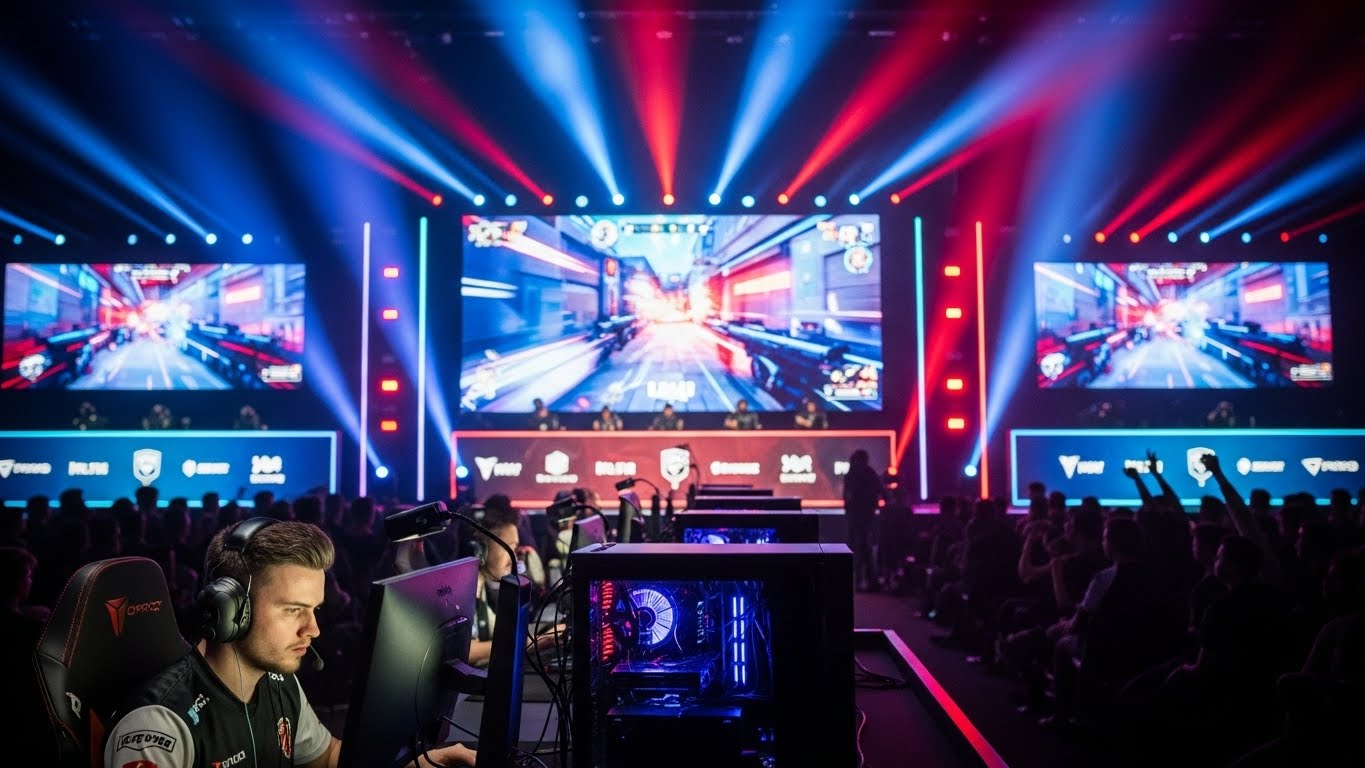
Esports, short for electronic sports, has undergone a rapid transformation over the past two decades, evolving from a niche hobby enjoyed by a small group of enthusiasts into a global entertainment and business juggernaut. Competitive video gaming is no longer just about casual tournaments held in basements or local LAN parties. Today, esports is a multi-billion-dollar industry, with millions of fans, professional players, huge sponsorships, and international competitions. In this blog post, we will delve into the history of esports, explore the major factors behind its rise, highlight the most popular games that have shaped the industry, and look ahead at what the future holds for esports.
The Birth of Esports: Early Days and Humble Beginnings
Esports as we know it today has its roots in the late 20th century, with the emergence of competitive gaming events. The first significant event that can be considered an esports competition was the “Red Annihilation” tournament for Quake in 1997, which offered a modest $1,000 cash prize. This was a far cry from the multi-million-dollar prize pools seen in modern esports competitions, but it set the stage for what was to come.
Following the success of Quake, other games like StarCraft and Warcraft III began to foster growing competitive communities. In South Korea, the emergence of StarCraft in the early 2000s was a pivotal moment in the esports revolution. The game became a national obsession, with televised broadcasts of professional matches and entire cable channels dedicated to esports content. This period marked the beginning of esports as a legitimate form of entertainment, not just for gamers but also for a wider audience.
The Explosive Growth of Esports: Technological Advancements and Globalization
The key factor in the meteoric rise of esports can be attributed to technological advancements, particularly the growth of the internet, the proliferation of online multiplayer games, and the emergence of streaming platforms. As internet speeds improved and online gaming became more accessible, competitive gaming moved from local LAN events to global tournaments, allowing players from all over the world to compete against one another in real-time.
At the same time, the rise of streaming platforms such as Twitch, YouTube Gaming, and Facebook Gaming revolutionized the way people consume esports content. These platforms provided a space for gamers to live-stream their matches, share their experiences, and connect with a global audience. The streaming of esports tournaments on platforms like Twitch was a game-changer, bringing large-scale esports events directly into the homes of millions of viewers.
Streaming also created a new avenue for monetization, allowing esports content creators and professional players to build substantial followings and generate revenue through advertisements, sponsorships, and fan donations. This was a crucial step in solidifying esports as a legitimate industry rather than just a niche hobby.
Esports Today: The Major Games Driving the Industry
Several key games have played a pivotal role in shaping the esports industry, each with its own competitive ecosystem, player base, and fan following. Here are a few of the most influential titles in the world of competitive gaming:
League of Legends (LoL)
Released in 2009 by Riot Games, League of Legends has become one of the most popular and enduring esports titles in history. This multiplayer online battle arena (MOBA) game pits two teams of five players against each other in strategic battles, with the goal of destroying the opposing team’s Nexus, located at the heart of their base.
What sets League of Legends apart from other games is its depth. The game’s ever-expanding roster of champions, regular updates, and evolving meta ensure that no two matches are ever the same. The League of Legends World Championship, held annually, is one of the biggest esports events globally, with millions of viewers tuning in to watch top teams from all over the world battle for the title.
The professional LoL scene is highly organized, with regional leagues in North America, Europe, China, and South Korea. The global competitive structure and massive audience base have made LoL the cornerstone of modern esports.
Dota 2
Developed by Valve Corporation, Dota 2 is another monumental title in the world of esports. Like League of Legends, Dota 2 is a MOBA, but it is known for its greater complexity and steeper learning curve. The game requires deep strategic thinking, individual skill, and exceptional teamwork to succeed. The highly competitive nature of Dota 2 has made it a favorite among hardcore gamers.
The International is Dota 2‘s premier annual tournament, and it is arguably the most prestigious and lucrative event in esports. The prize pool for The International is often funded by the community through crowdfunding, reaching tens of millions of dollars. This massive prize pool has made Dota 2 tournaments some of the most highly anticipated events in the gaming calendar, drawing millions of viewers and media attention.
Counter-Strike: Global Offensive (CS: GO)
Released in 2012, Counter-Strike: Global Offensive (CS: GO) is a first-person shooter (FPS) that has become one of the most popular and enduring competitive games in the world. CS: GO is a tactical, team-based shooter where two teams of five players compete to either plant or defuse a bomb or eliminate the opposing team. The game’s emphasis on strategy, skill, and teamwork has made it a favorite in the esports scene.
The CS: GO professional circuit is home to some of the most famous teams and players in the esports world. Tournaments like ESL One and DreamHack Masters attract huge crowds and have multi-million-dollar prize pools. CS: GO’s status as a global esports titan is solidified by its longevity and massive fan base.
Fortnite
Epic Games’ Fortnite revolutionized the gaming world when it was released in 2017. The battle royale mode, in which 100 players compete to be the last one standing, became a global sensation. Its free-to-play model and cartoonish, colorful aesthetic made it highly accessible to a wide audience, and its social features, including in-game events and collaborations with famous brands and artists, set it apart from other battle royale games.
Fortnite has its own competitive ecosystem, with the Fortnite World Cup offering massive cash prizes to top players. The game’s accessibility and global appeal have helped it carve out its place in the esports world, drawing players from all walks of life.
Overwatch
Blizzard Entertainment’s Overwatch is a team-based first-person shooter that focuses on diverse characters, each with their own unique abilities and playstyles. The game’s fast-paced, objective-driven gameplay has made it a fan favorite, and its emphasis on teamwork has translated well into the esports space.
The Overwatch League (OWL) is one of the most organized and well-funded esports leagues in the world, with professional teams representing cities across the globe. The OWL’s innovative structure, with its franchised teams and regular-season format, has helped elevate Overwatch to the forefront of competitive gaming.
The Business of Esports: Sponsorship, Media, and Revenue Streams
Esports has transitioned from a passion project to a multi-billion-dollar industry, attracting big-name sponsors, media deals, and major investments. One of the most significant drivers of the industry’s growth has been the sponsorship of esports teams and tournaments. Companies like Coca-Cola, Intel, and Red Bull have all recognized the massive reach of esports and are eager to get involved.
In addition to sponsorships, media rights have become an important source of revenue for esports organizations. Major media networks and streaming platforms are willing to pay significant sums to broadcast esports events. This has allowed tournaments and leagues to flourish and reach even larger audiences.
The rise of esports betting has also contributed to the financial success of the industry. With the increasing popularity of competitive gaming, fans are now able to place wagers on the outcomes of major tournaments, adding another layer of excitement and engagement to the esports experience.
The Future of Esports: Challenges and Opportunities
While esports is currently thriving, it faces several challenges and opportunities that will shape its future. One of the key challenges is ensuring the long-term sustainability of the industry. As esports becomes more mainstream, maintaining a balance between commercial interests and preserving the integrity of competitive gaming will be crucial.
On the other hand, the future of esports is also incredibly bright. The rise of virtual reality (VR) and augmented reality (AR) technologies could provide new opportunities for more immersive esports experiences. Additionally, the continued integration of esports into education, with many universities offering esports scholarships and programs, will help nurture the next generation of professional players and industry professionals.
Conclusion: Esports as the Entertainment of Tomorrow
Esports has come a long way from its early days in the late 90s. What began as small gatherings of gamers competing for pride and modest prizes has now blossomed into a global, multi-billion-dollar industry. The rise of esports is a testament to the growing cultural influence of video games and the increasing demand for competitive entertainment. As technology continues to evolve and new generations of gamers embrace esports, the industry will undoubtedly continue to grow, offering new opportunities for players, fans, and businesses alike. The future of esports is bright, and its potential is limitless.