





Esports has rapidly evolved from a niche hobby into a global phenomenon, attracting millions of fans, players, and investors from all corners of the world. What began as small LAN parties and online tournaments has now become a massive industry, with professional gamers, teams, and events that rival traditional sports in both scale and importance. This blog post aims to explore the rise of esports, its influence on the gaming culture, the players who drive it, and the future of competitive gaming.
The Birth of Esports: From Hobby to Global Industry
The term “esports” refers to competitive video gaming, typically involving multiplayer games played in a team-based format. However, competitive gaming dates back much further than most people realize. In the 1970s, games like Space Invaders were the first to spark interest in competitive play. However, it wasn’t until the late 1990s that esports began to develop into the massive industry we know today.
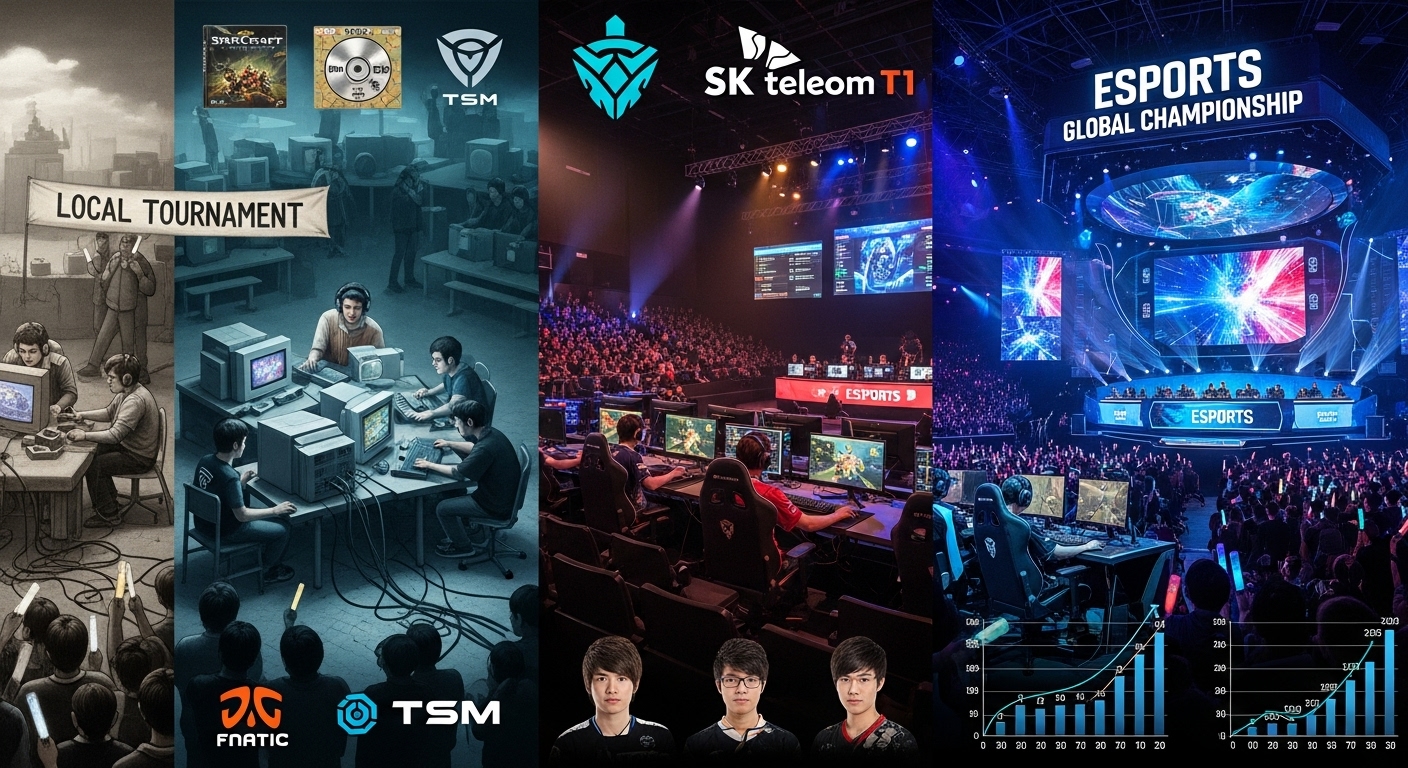
In the early days, competitive gaming was mostly casual. Players participated in LAN (Local Area Network) parties, where they could meet up to play games such as Quake, StarCraft, and Warcraft. These events were small, localized affairs, but they were pivotal in cultivating a sense of community and competition within the gaming world.
As the internet became more widely accessible, so did the opportunities for competitive gaming. StarCraft and Counter-Strike emerged as major competitive titles, with players engaging in online tournaments. By the mid-2000s, South Korea had become a hotspot for esports, with games like StarCraft: Brood War being broadcast on national television. These early esports events were the foundation upon which the global esports industry would eventually be built.
The Rise of Professional Esports Organizations
As esports grew in popularity, so too did the formation of professional teams and organizations. In the early years, individual players competed mostly alone or as part of loosely organized groups. However, with the increasing professionalism of the industry, esports teams began to form with the same structure as traditional sports teams.
Teams like Fnatic, SK Gaming, and Cloud9 became early staples in the esports world, each fielding top-tier players in games like League of Legends, Dota 2, Counter-Strike: Global Offensive, and Overwatch. These teams not only provided structure and support for their players but also became brands in their own right, attracting sponsorships and endorsements from major companies.
The involvement of sponsorships and big-name brands was crucial in legitimizing esports as a professional endeavor. It was no longer just about playing for fun; players were now receiving salaries, travel stipends, and other forms of compensation. As these teams grew in popularity, they began to compete in high-stakes tournaments with prize pools that rivaled those of traditional sports.
The Role of Streaming and Content Creation
One of the most important factors in the rise of esports has been the development of live streaming platforms, most notably Twitch. Twitch, which was launched in 2011, revolutionized how audiences engage with esports content. It allowed fans to watch their favorite players and teams compete live, as well as interact with them in real time via chat.
Twitch wasn’t the only platform contributing to the growth of esports, though. YouTube Gaming and Facebook Gaming also played significant roles, providing alternative platforms for players to stream their gameplay. These platforms not only allowed fans to watch live tournaments but also gave aspiring esports players a way to showcase their skills to a wider audience.
This shift towards streaming also paved the way for a new generation of content creators. Players like Ninja, Shroud, and PewDiePie rose to fame on platforms like Twitch and YouTube, influencing both the gaming community and mainstream culture. These content creators were not just esports players but also entertainers, engaging with fans through streams, videos, and social media.
The success of streaming also made esports more accessible to audiences worldwide. With platforms like Twitch and YouTube offering live coverage of tournaments and events, fans no longer had to be in the same city—or even the same country—as the competition to watch and enjoy esports.
Major Esports Tournaments and Leagues
As the popularity of esports continued to surge, major tournaments and leagues began to take shape. The League of Legends World Championship, held annually by Riot Games, has become one of the most-watched esports events in the world, with millions tuning in to watch the top teams from around the globe compete for a multi-million-dollar prize pool.
Similarly, The International—the premier tournament for Dota 2—has grown to become a global spectacle, with prize pools that have surpassed $40 million in recent years. These tournaments are not just about the games themselves but the atmosphere surrounding them. Large arenas are filled with excited fans, commentators hype up the action, and sponsorships flood the event, creating an almost festival-like experience.
In addition to these high-profile events, many games now have dedicated leagues. Overwatch League (OWL) is one example, featuring city-based teams competing in a regular season and playoff format, much like traditional sports leagues. Similarly, the Call of Duty League and CS:GO ESL Pro League have attracted attention from both fans and sponsors, creating a structure that mirrors traditional sports.
These tournaments and leagues have become more than just competitions; they are massive events that bring together fans, players, and brands. The spectacle of esports events—complete with commentary, interviews, and live reactions—has led to a new form of sports entertainment.
Esports as a Career: The Life of a Pro Gamer
As esports has evolved into a professional industry, the life of a pro gamer has changed drastically. The stereotype of the lone gamer playing in their basement has been replaced by a team-based, highly organized lifestyle. Professional players are now treated as athletes, with coaches, analysts, and support staff helping them maximize their potential.
Training for esports is no different from training for traditional sports. Players spend hours every day practicing their skills, studying the game, and reviewing footage of their matches. They work with coaches to improve their strategies and communication. Just like in traditional sports, there’s a focus on physical and mental health to ensure players can perform at their best.
But while the life of a pro gamer may seem glamorous, it’s not all fun and games. The pressure to perform is intense, and many esports players experience burnout from the long hours of practice and competition. Esports players also have relatively short careers, with many retiring in their mid-20s or early 30s. To compensate for this, many players transition into coaching, content creation, or broadcasting after their competitive careers end.
While playing professionally is a dream for many gamers, it requires an extraordinary level of dedication, skill, and sacrifice. Not every aspiring player can make it to the top, and the competition is fierce.
The Impact of Esports on Gaming Culture
Esports has had a profound effect on gaming culture. What was once seen as a solitary activity has now become a community-driven, competitive, and social experience. The rise of esports has turned gaming into something that can be shared with others on a global scale, with players interacting with fans and other gamers online.
This shift has also led to a broader acceptance of gaming as a legitimate form of entertainment. In the past, gamers were often seen as outcasts or “nerds,” but the mainstream popularity of esports has changed that narrative. Esports has created a space where people of all backgrounds can come together to share their love for gaming, whether they’re playing, spectating, or creating content.
In addition, esports has also had a huge influence on the development of new gaming technologies. Games are being designed with competitive play in mind, and developers are constantly looking for ways to enhance the player experience. This has led to the creation of esports-specific features, such as spectator modes, improved matchmaking systems, and more.
The rise of esports has also led to the development of a thriving ecosystem of gaming-related businesses, from equipment manufacturers and sponsors to media companies and event organizers. Companies like Logitech, Razer, and Intel have capitalized on the growth of esports, creating products specifically designed for gamers and competitive players.
The Future of Esports
The future of esports looks incredibly bright. As technology continues to advance, esports will only become more immersive, accessible, and exciting. Virtual reality (VR) and augmented reality (AR) could change the way we experience esports, providing fans with new ways to interact with the games and players.
In addition, as esports continues to grow in popularity, there will be even more opportunities for players and fans to engage with the industry. The potential for mainstream media coverage, including television broadcasts, is already a reality in some countries. Esports may soon be as accessible and widely broadcast as traditional sports.
Esports will also continue to push the boundaries of competitive gaming. New genres, innovative game mechanics, and advanced AI will likely shape the future of competitive gaming. And as new games rise to prominence, esports will continue to diversify, allowing for a wider variety of gameplay experiences.
One of the most exciting possibilities is the potential for esports to become part of the Olympics. The International Olympic Committee has already shown interest in including esports in the Games, and many believe that it’s only a matter of time before esports is fully integrated into the Olympic movement.
Conclusion: A New Era for Competitive Gaming
Esports has come a long way from its humble beginnings, and its rise to prominence is one of the most exciting developments in the world of entertainment. With millions of fans, professional players, and investors involved, esports has proven that it’s not just a passing trend but a major cultural and economic force.
As the industry continues to grow and evolve, esports will undoubtedly play a pivotal role in shaping the future of gaming and entertainment. Whether you’re a player, a fan, or an investor, one thing is clear: esports is here